President Donald Trump wants America to lead the artificial intelligence race, but Washington’s biggest competitor also controls a critical part of the supply chain needed to win it.
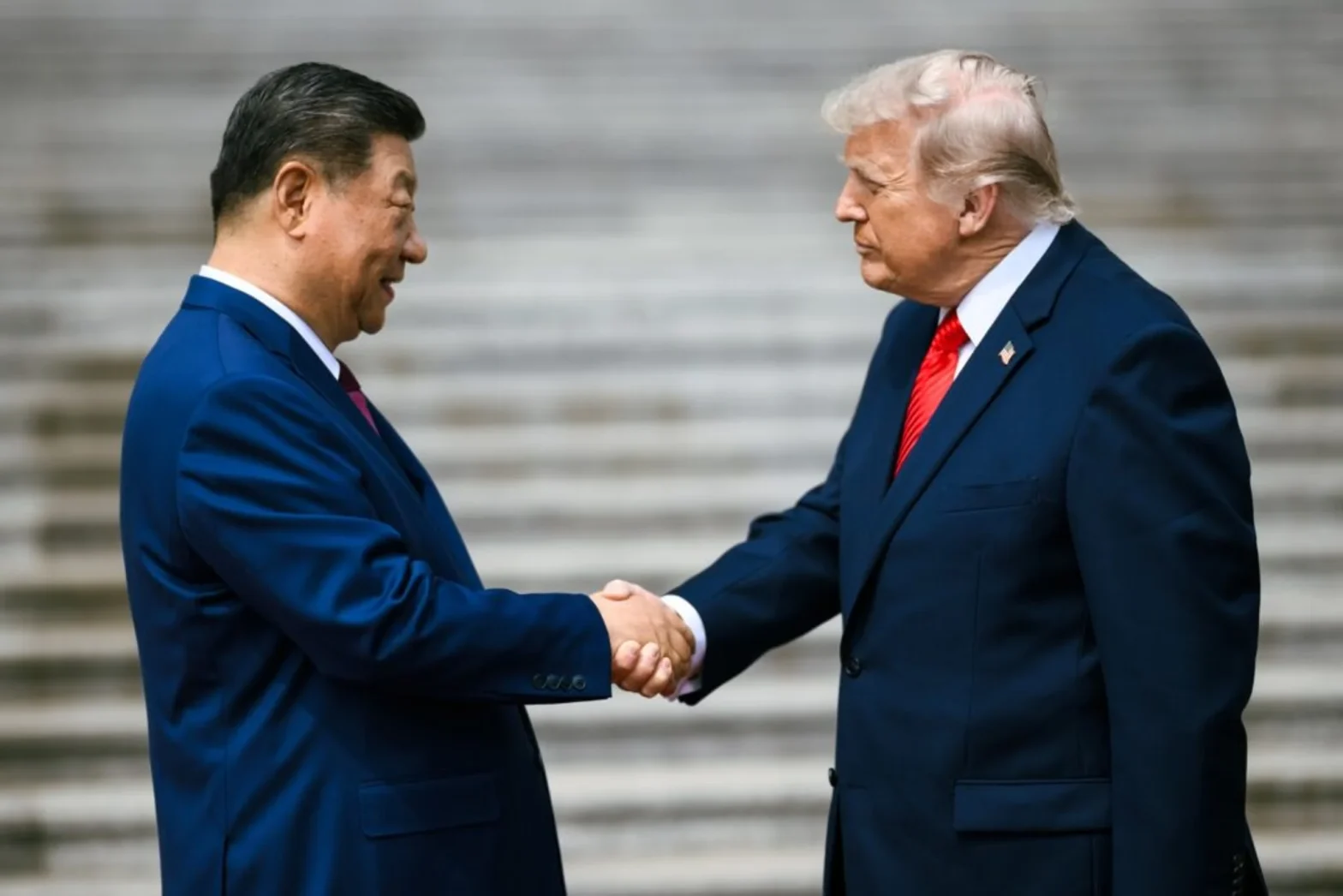
As Trump prepares to engage Chinese President Xi Jinping, America’s dependence on Chinese rare earths threatens to complicate its push to build a China-proof AI ecosystem.
Trump’s AI Ambitions Run Into China’s Mineral Advantage
Trump is expected to press Southeast Asian economies to join Pax Silica at the ASEAN summit in Manila, according to the South China Morning Post. The initiative aims to reduce dependence on China in AI and chip supply chains, with artificial intelligence and critical minerals expected to top his agenda.
Quad leaders are expected to announce $85 million in technical and financial assistance for trusted AI infrastructure across the Indo-Pacific, according to the South China Morning Post. But there is a significant weakness in Washington’s strategy: China remains deeply entrenched in rare-earth processing and permanent magnet manufacturing, giving Beijing leverage over industries ranging from electric vehicles and consumer electronics to advanced defense systems.
These materials also support the motors, cooling equipment and other hardware used across the expanding technology infrastructure.
America’s AI Supply Chain Still Runs Through China
The gap between Washington’s ambitions and its domestic capabilities is substantial. U.S. annual neodymium-iron-boron magnet production capacity stood at approximately 4,500 metric tons in 2025, compared with roughly 210,000 tons in China, according to Reuters.
The vulnerability is not theoretical. China’s rare-earth export restrictions have continued to constrain American manufacturers despite successive trade agreements. The Center for Strategic and International Studies said U.S. imports of rare-earth compounds and metals from China averaged just 19.3 metric tons per month between November 2025 and September 2026, down nearly 75% from the average before the restrictions.
That leaves some of America’s biggest manufacturers exposed to supply disruptions through their supplier and component networks. Apple Inc. (NASDAQ:AAPL), Tesla Inc. (NASDAQ:TSLA), General Motors Co. (NYSE:GM) and Ford Motor Co. (NYSE:F) operate in industries that depend on rare-earth magnets for electronics, electric motors and other automotive components.
Apple has committed $500 million to a partnership with MP Materials to secure recycled rare-earth magnets, while GM has a long-term magnet supply agreement with the company.
The defense industry faces similar vulnerabilities. Lockheed Martin Corp. (NYSE:LMT) , which manufactures fighter jets and missile defense systems, is among the contractors seeking to strengthen domestic critical-mineral supply chains.
MP Materials Could Be a Domestic Supply-Chain Winner
The bottleneck also creates an opportunity for companies trying to build alternatives to Chinese supply.
MP Materials Corp. (NYSE:MP), which operates the Mountain Pass rare-earth mine in California, is expanding its domestic magnet manufacturing capabilities. USA Rare Earth, Inc. (NASDAQ:USAR) is pursuing an integrated mining-to-magnet strategy, backed by up to $1.6 billion in federal funding commitments. Australia’s Lynas Rare Earths Limited (OTC:LYSCF) , meanwhile, offers another source of rare-earth production and processing outside China.
But the transition will take time. Reuters reported that several major domestic mineral and processing projects remain years away from production, meaning U.S. manufacturers cannot quickly replace China’s existing capacity.
For investors, the question is whether Trump’s engagement with Xi can secure more reliable access to Chinese materials while America’s domestic alternatives scale up. A trade agreement could ease immediate supply pressures, but it would not eliminate the underlying dependence.
The progress of MP Materials, USA Rare Earth and Lynas may ultimately offer a better measure of whether Washington can turn its AI ambitions into a more resilient industrial advantage.
MP Price Action: MP Materials shares were up 0.40% at $35.00 in premarket trading Wednesday, according to Benzinga Pro data.
Photo: Shutterstock